American White Pelicans
Endangered in British Columbia, Canada
Threatened in Ontario, Canada
The American White Pelican is endangered in British Columbia Canada and is threatened in Ontario Canada.
The Province of British Columbia Ministry of Environment, Lands and Parks has designated the American White Pelican as endangered.
Nesting in British Columbia
Stum Lake - The Only Nesting Colony
Though these birds mate in different parts of British Columbia, there is only one nesting colony of American White Pelicans. It is located at Stum Lake in White Pelican Provincial Park in the Chilcotin region, 70 kilometres west of Williams Lake.
Vulnerability and Threats
Because these colonial birds are migratory, have only a single nesting site, and feed on fish in shallow lakes sometimes hundreds of kilometres from Stum Lake, they are particularly vulnerable to a variety of threats.
Natural Threats
At Stum Lake, both natural and human-influenced events can affect nesting success. Fluctuating water levels are the most frequent natural cause of colony abandonment:
- In drought years, nesting islands become connected to the mainland, allowing access to land-based predators
- A single severe flood or a series of wet years can result in inundation of islands
Over the thousands of years they have existed on this continent, white pelicans have been able to cope with these natural events and maintain their overall population. In recent decades, however, various drainage, irrigation, and diversion projects, particularly in the United States, have resulted in the demise of some colonies.
Protection Measures at Stum Lake
Steps have been taken to protect the nesting grounds at Stum Lake. Stum Lake, within White Pelican Provincial Park, is closed to the public from March 1 – August 31 every year to protect the White Pelican nesting colony.
Prohibited Activities (March 1 - August 31):
- Canoeing and boating
- Hunting and trapping
- Discharge of firearms
- Aircraft operation below 600 metres in elevation
- Aircraft landing
They are very sensitive to disturbance; disturbances can result in the loss of all young.
Pelican viewing opportunities exist at Nazko Lake Park and in other lakes in the Chilcotin.
Conservation in Ontario
Threatened Status
In the Canadian province of Ontario, another important stop for the American White Pelican, this bird has been designated to the threatened list in that region.
"Threatened" meaning: the species lives in the wild in Ontario, is not endangered, but is likely to become endangered if steps are not taken to address factors threatening it.
The pelican was an endangered species in Ontario from 1977 to 2009, but was 'upgraded' to threatened in 2009.
Recovery Strategy
The Ministry of Natural Resources and Forestry has developed an American White Pelican Recovery Strategy. A recovery strategy provides the best available scientific knowledge on what is required to achieve recovery of a species.
What a Recovery Strategy Includes:
- Outlines the habitat needs of the species
- Identifies threats to the survival and recovery of the species
- Makes recommendations on objectives for protection and recovery
- Suggests approaches to achieve those objectives
- Defines areas that should be considered for habitat regulation development
Recovery strategies are required to be prepared for endangered and threatened species within one or two years respectively of the species being added to the Species at Risk in Ontario list. There is a transition period of five years to develop recovery strategies for those species listed as endangered or threatened.
Nesting Sites in Ontario
In Ontario, the pelicans nest primarily on two lakes in the northwest — Lake of the Woods and Lake Nipigon. But the birds can fly hundreds of kilometres away to get food.
Debunking Myths: Pelicans vs. Sport Fishing
In the past, fisherman in the Ontario area had been complaining that the birds are competing with them for fish and are therefore an invasive species.
The Truth:
- ✓Pelicans don't consume sports fish
- ✓They eat different fish in the lakes
- ✓Pelicans are not depleting lakes of sports fish
- ✓They are helping with the ecosystem by consuming invasive creatures that could take over lakes and fisheries
Since Pelicans are often viewed by sports fisherman as possible competition for sport fish there's a history of harassment and persecution of pelicans because of that. However, pelicans are not a threat to sports fishing since they eat different fish in the lakes.
Legal Protection
The Ontario Government does not agree with abuse of their threatened American White Pelicans.
The Ministry of Natural Resources can lay charges for disturbing or destroying habitat within 300 meters of a pelican nesting colony.
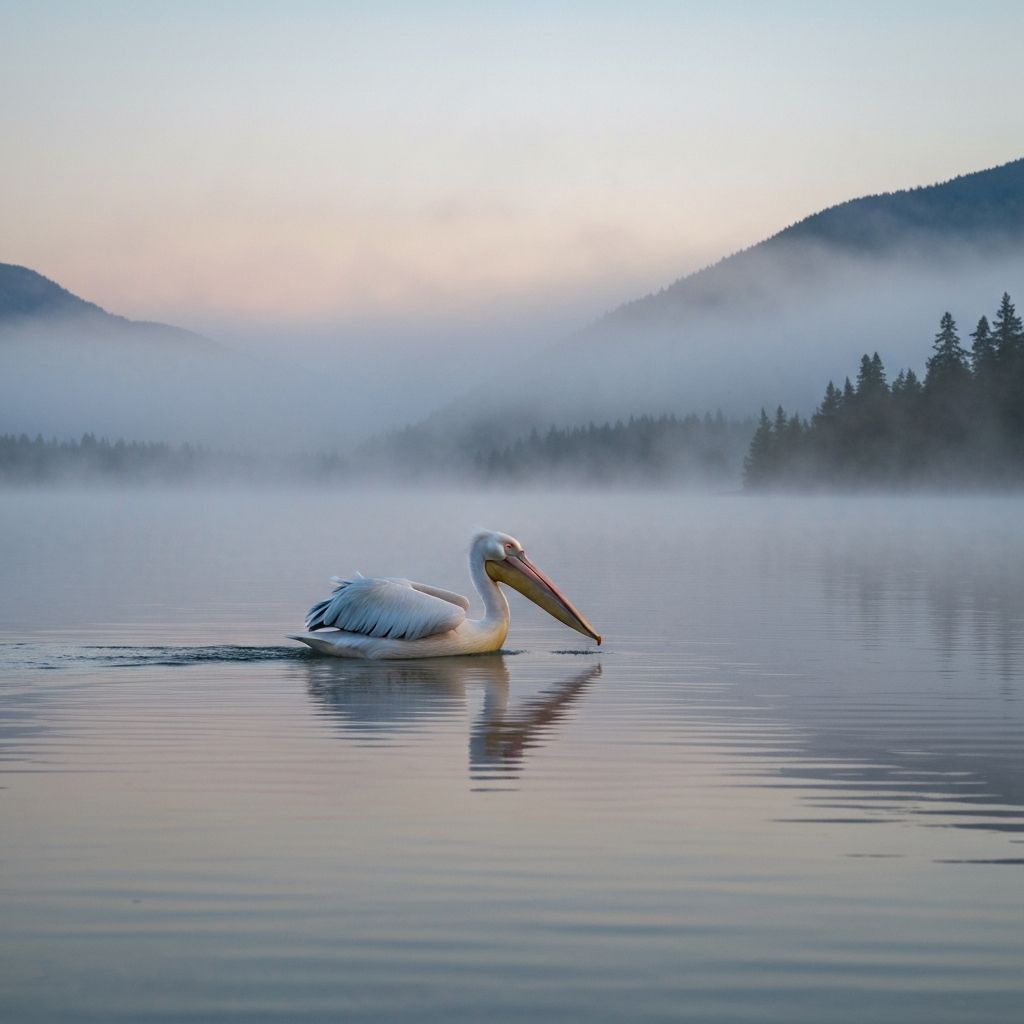
An early morning hunt for fish ensues in the misty fog of a pristine lake in Quesnel, B.C.
Help Protect American White Pelicans
These magnificent birds need our protection to survive. Learn more about how you can help conservation efforts.