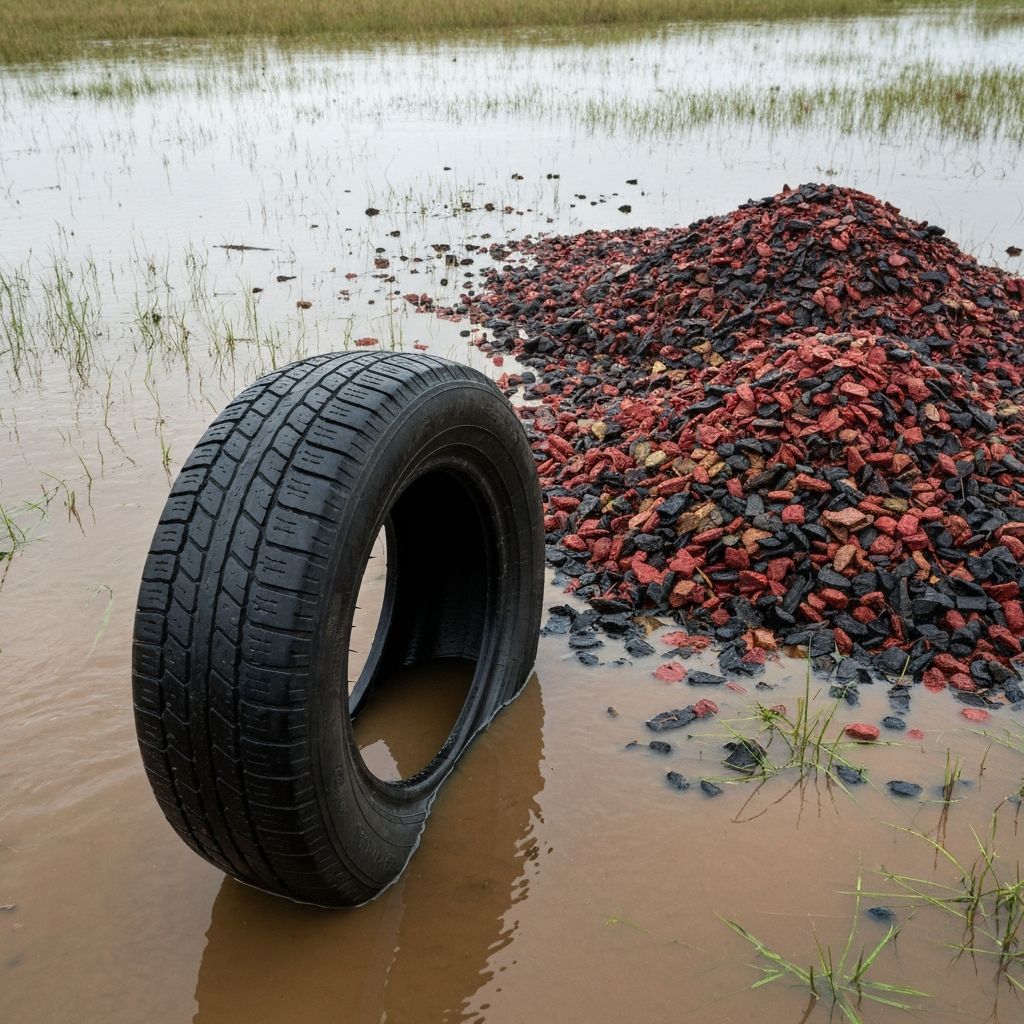
Walk into any Home Depot, Lowe's, or landscaping supply store, and you'll find bags of brightly colored rubber mulch proudly displayed. The marketing promises durability, weed suppression, and an eco-friendly way to recycle old tires. What it doesn't tell you is that you're spreading a cocktail of toxic chemicals across your property—chemicals that will leach into your soil, contaminate groundwater, and persist in the environment for decades.
A Brief History of a Bad Idea
Rubber mulch emerged as a commercial landscaping product in the early 1990s, with the industry gaining significant momentum by 2005. The concept was simple: America had a massive scrap tire problem—approximately 300 million tires are discarded annually in the United States alone—and entrepreneurs saw an opportunity to turn waste into profit.
The tire recycling industry marketed rubber mulch as a win-win: consumers would get a long-lasting landscaping material, and the planet would benefit from reduced tire waste. What they conveniently omitted was decades of research showing that tire rubber contains a complex mixture of hazardous chemicals designed to make tires durable—chemicals that don't simply disappear when the tires are shredded into mulch.
What's Really in Rubber Mulch?
Studies have identified numerous toxic compounds that leach from rubber mulch:
- Benzothiazole — Causes skin and eye irritation; toxic to aquatic organisms
- Butylated hydroxyanisole (BHA) — A recognized carcinogen and suspected endocrine disruptor
- Heavy metals — Including zinc, copper, arsenic, thallium, antimony, and chromium
- 6PPD-quinone — Acutely toxic to salmon and other aquatic species
- Polycyclic aromatic hydrocarbons (PAHs) — Known carcinogens
The Hurricane Factor: When Rubber Mulch Becomes Mobile
In hurricane-prone regions like Florida, the Gulf Coast, and the Eastern Seaboard, rubber mulch poses an additional threat that most homeowners never consider: mobility during storms.
Unlike organic mulches that decompose and integrate with the soil over time, rubber mulch remains intact indefinitely. When hurricanes bring flooding and high winds, this lightweight material becomes waterborne debris—spreading far beyond the gardens and playgrounds where it was installed.
Storm surge and flood waters carry rubber mulch into wetlands, estuaries, rivers, and coastal ecosystems. Once there, it continues to leach toxic chemicals into these fragile environments for years. The very durability that makes rubber mulch attractive to consumers makes it an environmental nightmare when dispersed by extreme weather.
The Hidden Victims: Wildlife and Soil Health
One of the most alarming discoveries in recent years is the toxicity of 6PPD-quinone, a chemical formed when the tire additive 6PPD reacts with ozone. Research by the U.S. Geological Survey and EPA has linked this compound to mass die-offs of coho salmon in the Pacific Northwest.
But salmon are just the beginning. Rubber mulch affects entire ecosystem food chains:
- Soil organisms: Earthworms, beneficial bacteria, and fungi that maintain soil health cannot process rubber like organic matter
- Insects and pollinators: Ground-nesting bees and beneficial insects are exposed to leached chemicals
- Birds: Species that forage in mulched areas may ingest small rubber particles or contaminated insects
- Aquatic life: Zinc and other heavy metals leaching into waterways accumulate in fish and amphibians
Unlike organic mulches, rubber never breaks down to enrich the soil. It simply sits there—a permanent, non-biodegradable layer that prevents natural soil processes and slowly releases toxins into the environment.
Better Alternatives: Natural Mulches That Actually Help
Note: Wood-based mulches are made from forestry byproducts—bark, sawdust, branches, and trimmings left over from lumber production and tree maintenance—not from trees cut specifically for mulch. Using these byproducts is actually more sustainable than burning them, which was the previous industry practice.
Warning: Avoid dyed/colored mulch (bright red, black, etc.). While the dyes themselves are usually non-toxic, colored mulch is often made from recycled wood—construction debris, shipping pallets, and demolition waste—that may contain chromated copper arsenate (CCA), creosote, or chemical contamination. Always choose natural, undyed mulch and ask about the wood source.
Hardwood or Cedar Mulch
Made from sawmill byproducts and tree trimmings. Decomposes slowly over 2-3 years, enriching soil with organic matter. Cedar naturally repels many insects. Stays in place better than rubber during storms and integrates with the environment rather than contaminating it.
Pine Bark or Pine Straw
Pine bark is a lumber industry byproduct; pine straw is collected from forest floors. Excellent for acid-loving plants. Pine straw interlocks, making it resistant to washing away in heavy rains. Both decompose to improve soil structure and drainage.
Composted Leaves
Free if you have trees! Leaf mulch is one of the best soil amendments available. It supports beneficial insects, feeds soil organisms, and returns nutrients to the earth.
Straw or Hay
Affordable and excellent for vegetable gardens. Breaks down quickly, adding organic matter to the soil. Perfect for seasonal applications.
Gravel or Stone (for non-planted areas)
For pathways or areas where you don't need soil enrichment, natural stone is permanent, non-toxic, and won't leach chemicals into the environment.
The Real Cost Comparison
| Factor | Rubber Mulch | Organic Mulch |
|---|---|---|
| Soil Health | Damages soil biology | Improves soil over time |
| Chemical Leaching | Releases toxins for decades | Releases beneficial nutrients |
| Wildlife Impact | Harmful to many species | Supports ecosystem health |
| Storm Dispersal | Spreads contamination | Breaks down naturally |
| End of Life | Permanent pollution | Returns to earth |
What You Can Do
1. Don't buy rubber mulch. Choose organic alternatives that support rather than harm your local ecosystem.
2. Remove existing rubber mulch. If you already have it, consider removing it and disposing of it properly at a tire recycling facility—not in regular trash.
3. Spread awareness. Many people simply don't know the dangers. Share this information with neighbors, HOAs, schools, and community organizations.
4. Contact retailers. Ask Home Depot, Lowe's, and other retailers why they continue to sell a product that contaminates soil and water.
5. Advocate for change. Support legislation requiring warning labels on rubber mulch products or restricting their use near waterways and in flood-prone areas.
The rubber mulch industry has successfully marketed a toxic waste product as an eco-friendly landscaping solution. They've convinced well-meaning homeowners, schools, and municipalities that spreading shredded tires on the ground is somehow good for the environment.
It's not. It never was. And until we stop buying it, companies will keep selling it.
The environmental disasters we fear—oil spills, chemical plant accidents, industrial pollution—often seem far away and out of our control. But rubber mulch? That's a disaster we're choosing to create, one bag at a time, in our own backyards. And that means it's also a disaster we can choose to stop.
Sources & Further Reading
- •Environment and Human Health, Inc.: Toxicology and Health Effects of Tire Crumb Rubber
- •Nature Scientific Reports: Heavy Metal Contamination from Tire Crumb Rubber (2023)
- •National Institutes of Health: Water Quality Issues Associated with Tire Leachate
- •U.S. EPA: 6PPD-Quinone Research and Aquatic Toxicity
- •U.S. Geological Survey: Research on 6PPD-Quinone and Salmon Mortality
- •Washington State University Extension: Rubber Mulch Research Summary
Endangered Earth Team
Dedicated to uncovering environmental threats and empowering individuals to make informed choices that protect our planet's fragile ecosystems.