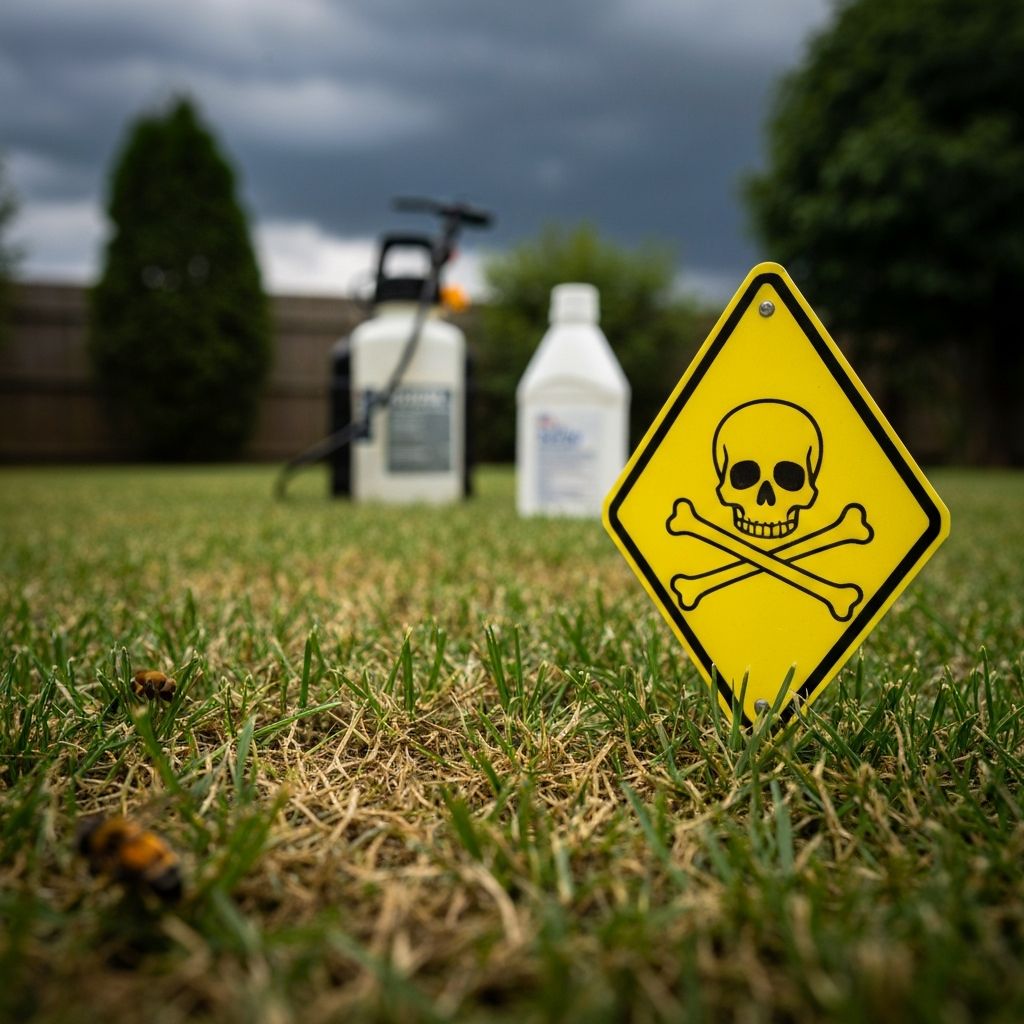
The Poison in Your Garden: Why Roundup & Common Weedkillers Are Still on Shelves
Walk into any Home Depot, Lowe's, or Walmart, and you'll find shelves stocked with Roundup, Spectracide, and RM43—products containing glyphosate, a chemical classified as "probably carcinogenic to humans." Despite over 170,000 lawsuits, billions in settlements, and mounting scientific evidence, these products remain readily available to unsuspecting consumers. Here's what they don't want you to know.
$10 Billion in Settlements—And Counting
In 2015, the International Agency for Research on Cancer (IARC), part of the World Health Organization, classified glyphosate as "probably carcinogenic to humans" based on evidence linking it to non-Hodgkin lymphoma. Since then, Bayer (which acquired Monsanto, Roundup's original maker) has faced an avalanche of litigation.
As of March 2025, Bayer has paid approximately $10 billion to settle claims and set aside another $5.9 billion for pending cases. In January 2024 alone, a jury ordered Bayer to pay $2.25 billion in a single Roundup trial. Nearly 50,000 lawsuits remain pending.
Yet walk into your local hardware store today, and you can still buy it off the shelf.
Products Containing Glyphosate
- Roundup - The most recognized brand, now owned by Bayer
- Spectracide Weed & Grass Killer - Widely available at big box stores
- RM43 Total Vegetation Control - Contains 43% glyphosate PLUS imazapyr (carries "DANGER" label, classified as Category 1B carcinogen)
- Ortho GroundClear - Another common residential option
- Compare-N-Save Concentrate - Budget glyphosate option
How You're Being Exposed
Many people assume that if they're just spraying weeds in their backyard, they're safe. The reality is far more concerning. Exposure to glyphosate happens through multiple routes:
Inhalation
When you spray, microscopic droplets become airborne. You breathe them in during application and for hours afterward. Wind can carry spray drift to neighboring properties, exposing people who never chose to use these products.
Skin Contact
Dermal absorption is a major exposure route. Touching treated plants, walking on treated lawns, or handling the sprayer without proper protection allows glyphosate to enter your bloodstream through your skin.
Contaminated Soil & Water
Rain washes glyphosate into soil and groundwater. Studies have detected it in drinking water sources. If you grow vegetables in treated areas, you may be ingesting residues with your food.
Residue Contact
Walking on treated grass, sitting on treated lawns, or touching plants sprayed days earlier can still result in exposure. Glyphosate doesn't simply disappear after drying—it persists in the environment.
Who's Most at Risk?
Children
Children are especially vulnerable due to their developing bodies, lower body weight, and behaviors—they play on lawns, put hands in their mouths, and have higher respiration rates relative to their size. A child playing on a recently treated lawn receives far more exposure per pound of body weight than an adult.
Pets & Dog Walkers
Dogs are at extreme risk. They walk barefoot through treated areas, lie on treated grass, and lick their paws—ingesting whatever chemicals they've picked up. Research suggests dogs may harbor significantly more glyphosate in their bodies than humans. Symptoms of glyphosate poisoning in dogs include vomiting, diarrhea, lethargy, and in severe cases, neurological and organ damage. Dog walkers who traverse neighborhood lawns unknowingly expose themselves and their pets to multiple treated areas daily.
The Damage Is Done Before It Leaves
What happens when glyphosate enters your body
Many people assume that because glyphosate is eventually excreted (primarily through urine over 6-33 hours), it poses no lasting threat. This is dangerously wrong.
Once absorbed—whether through inhalation, skin contact, or ingestion—glyphosate circulates through your bloodstream and reaches your kidneys, liver, and brain. While there, it causes measurable damage:
- Oxidative stress - Glyphosate generates free radicals that damage cells
- DNA and chromosomal damage - Studies confirm glyphosate damages genetic material in human cells
- Endocrine disruption - It interferes with hormone function even at low doses
- Gut microbiome disruption - Glyphosate's original mechanism (blocking the shikimate pathway) affects your gut bacteria
Here's the critical point: Even though each individual dose leaves your body, the cellular damage accumulates.
Can the damage heal?
Your body does have DNA repair mechanisms, but they have limits:
- What may recover: Mild oxidative stress, some DNA damage (if repaired before cell division)
- What does NOT heal: Mutations (once DNA is incorrectly repaired, mutations are permanent and passed to all future cells), dead cells in organs with limited regeneration, epigenetic changes affecting gene expression
The problem: Chronic repeated exposure overwhelms your repair mechanisms. Damage occurs faster than your body can fix it, and mutations accumulate. This is why cancer risk increases with cumulative exposure over years—not from a single dose.
If you're regularly exposed—from treating your lawn monthly, walking through treated neighborhoods, eating food with residues—you're continuously adding new damage faster than your body can repair. This is why chronic, repeated exposure is linked to cancer: it's not about one dose staying forever, it's about the cumulative toll on your cells over years of exposure.
Research from the NIH's Agricultural Health Study and Environmental Health Perspectives confirms associations between cumulative glyphosate exposure and oxidative stress biomarkers, chromosomal damage, and increased cancer risk.
Documented Health Effects
The WHO's IARC classification was based on evidence linking glyphosate to:
- Non-Hodgkin lymphoma - A cancer of the lymphatic system
- DNA and chromosomal damage - In human cells exposed to glyphosate
- Oxidative stress - Cellular damage that can lead to various diseases
- Endocrine disruption - Interference with hormone systems
RM43, which contains both glyphosate AND imazapyr, carries additional warnings. Its Safety Data Sheet classifies it as a Category 1B carcinogen, states it causes irreversible eye damage, and notes it is hazardous to aquatic life with long-lasting effects.
The Ecological Devastation
While you're spraying weeds, you're also poisoning the creatures that make your garden—and our planet—thrive.
Impact on Pollinators & Wildlife
Honeybees & Bumblebees
Research published in Science found that glyphosate impairs bees' cognitive and sensory abilities, affecting their navigation and increasing flight time back to the hive. Bumblebee colonies exposed to glyphosate struggle to maintain proper hive temperatures—critical for brood development. While not immediately lethal, these sublethal effects are devastating at the colony level.
Butterflies & Moths
Glyphosate destroys the native plants that caterpillars depend on. Milkweed—essential for monarch butterflies—has been devastated by widespread herbicide use, contributing to the monarch population decline of over 80% in recent decades.
Birds
Birds that eat insects from treated areas ingest glyphosate residues. Seed-eating birds consume contaminated seeds. The disruption of insect populations removes a critical food source, particularly for birds feeding their young.
Soil Organisms
Earthworms, beneficial bacteria, and fungi that maintain soil health are all affected by glyphosate. You're not just killing weeds—you're sterilizing your soil's living ecosystem.
Why Are These Products Still on Shelves?
This is perhaps the most infuriating question. The answer comes down to money and regulatory capture.
The EPA's position: Despite the IARC classification, the U.S. Environmental Protection Agency has maintained that glyphosate is "not likely to be carcinogenic to humans." This position has been heavily influenced by industry-funded studies and lobbying. Internal documents revealed in litigation showed Monsanto's influence on the regulatory process.
The profit motive: Glyphosate is big business. Roundup alone has generated billions in revenue. Companies continue selling it because the profits outweigh the legal costs—at least for now.
Bayer's potential exit: As of March 2025, Bayer has indicated it may stop selling Roundup in the U.S. due to mounting legal risks—not because they've acknowledged it's dangerous, but because the liability has become unsustainable. Yet generic glyphosate products remain widely available.
Safer Alternatives That Actually Work
You don't need toxic chemicals to manage weeds. Here are effective, safer options:
Vinegar-Based Herbicides
Horticultural vinegar (20% acetic acid, stronger than household vinegar) effectively kills weeds on contact. Apply on warm, dry days. Look for OMRI-listed organic products. Note: Wear eye protection—concentrated vinegar can irritate eyes.
Boiling Water
Simple but effective for weeds in sidewalk cracks and driveways. The heat destroys plant cells on contact. Costs nothing and leaves no residue.
Manual Removal & Mulching
Pull weeds when soil is moist. Apply 3-4 inches of natural mulch (see our article on choosing safe mulch) to suppress new growth. This builds soil health rather than destroying it.
Corn Gluten Meal
A natural pre-emergent herbicide that prevents weed seeds from germinating. Also adds nitrogen to your soil. Apply in early spring before weeds sprout.
Flame Weeding
Propane torch weeders kill weeds by rupturing their cell walls with brief heat exposure. Effective for driveways, patios, and between garden rows. Use with appropriate fire safety.
What You Can Do
1. Stop buying glyphosate products. Every purchase signals demand. Choose safer alternatives that don't poison your family, pets, or neighborhood wildlife.
2. Talk to your neighbors. If they spray, that drift affects you. Share this information. Many people simply don't know.
3. Demand change from retailers. Ask Home Depot, Lowe's, and Walmart why they continue selling products with billions in cancer-related lawsuits.
4. Support organic lawn care services. If you use professional lawn care, demand they use non-toxic alternatives.
5. Protect your pets. Keep dogs off treated lawns. If you don't know whether an area has been sprayed, assume it has.
The fact that you can still buy Roundup at your local hardware store is a testament to how thoroughly corporate interests have captured our regulatory systems. The evidence is clear. The lawsuits are piling up. The settlements are in the billions.
Yet the products remain on shelves, and unsuspecting families continue spraying poison in their backyards.
The only way this changes is if we stop buying it. Your garden doesn't need glyphosate. Your family doesn't need the risk. And our pollinators can't survive it.
Sources & Further Reading
- •International Agency for Research on Cancer: Glyphosate Monograph (2015)
- •Reuters: "Bayer eyes exit from Roundup amid U.S. legal risks" (2025)
- •Science: Glyphosate effects on bumblebee thermoregulation
- •PMC: Glyphosate effects on honeybee navigation and cognition
- •ATSDR: Toxicological Profile for Glyphosate - Exposure Routes
- •PetMD: Herbicide Poisoning in Dogs
- •U.S. EPA: Biological Evaluation of Glyphosate Risks to Listed Species
Endangered Earth Team
Dedicated to uncovering environmental threats and empowering individuals to make informed choices that protect our planet's fragile ecosystems.